
Introduction
The kitchen is often the heart of the home. It is a space where culinary creations come to life and family gatherings occur. As kitchen spaces evolve, so does the importance of effective lighting. A well-planned lighting scheme not only enhances functionality but also adds to the ambience and aesthetic appeal of your kitchen. Proper lighting can transform a mundane cooking area into a stylish and inviting environment.

Understanding the Three Layers of Kitchen Lighting
Creating an effective kitchen lighting scheme involves understanding three essential layers: ambient, task, and accent lighting. Each plays a vital role in ensuring your kitchen is functional and aesthetically pleasing. By applying this layered approach, you can achieve a well-rounded design that enhances usability while creating a warm and inviting atmosphere.
Ambient Lighting: The Base Layer
Ambient lighting serves as the foundation of your overall lighting scheme. It provides general illumination throughout the kitchen and is essential for navigating the space safely. This type of lighting comes from various sources:
- Ceiling Fixtures: Central ceiling lights are the most common form of ambient lighting. Whether it’s a pendant light, chandelier, or flush-mounted fixture, the goal is to evenly distribute light across the room.
- Wall-Mounted Lights: Sconces and other wall-mounted fixtures also contribute to ambient light levels, particularly in breakfast nooks or dining areas in open-plan kitchens.
When choosing ambient lighting for your kitchen, consider these factors:
- Colour Temperature: The warmth or coolness of light significantly affects the atmosphere. A colour temperature of 2700 to 3000 Kelvin offers a warm glow that makes the kitchen feel inviting.
- Brightness Levels: Aim for at least 300 to 400 lumens per square metre for effective ambient lighting.
Common Types of Ambient Fixtures:
- Flush Mount Lights: Ideal for kitchens with lower ceilings, providing unobtrusive illumination.
- Chandeliers: A stylish choice for larger kitchens, chandeliers can become a centrepiece while providing ample lighting.
By properly implementing ambient lighting, the kitchen becomes a welcoming space, facilitating both everyday cooking tasks and social interactions.
Task Lighting: Illuminating Key Areas
Task lighting is essential for specific activities such as cooking, food prep, and cleaning. It focuses on illuminating areas where detailed work occurs. A well-planned task lighting scheme ensures that vital workspaces in your kitchen are well-lit, reducing eye strain and increasing efficiency. Here are some effective options for task lighting:
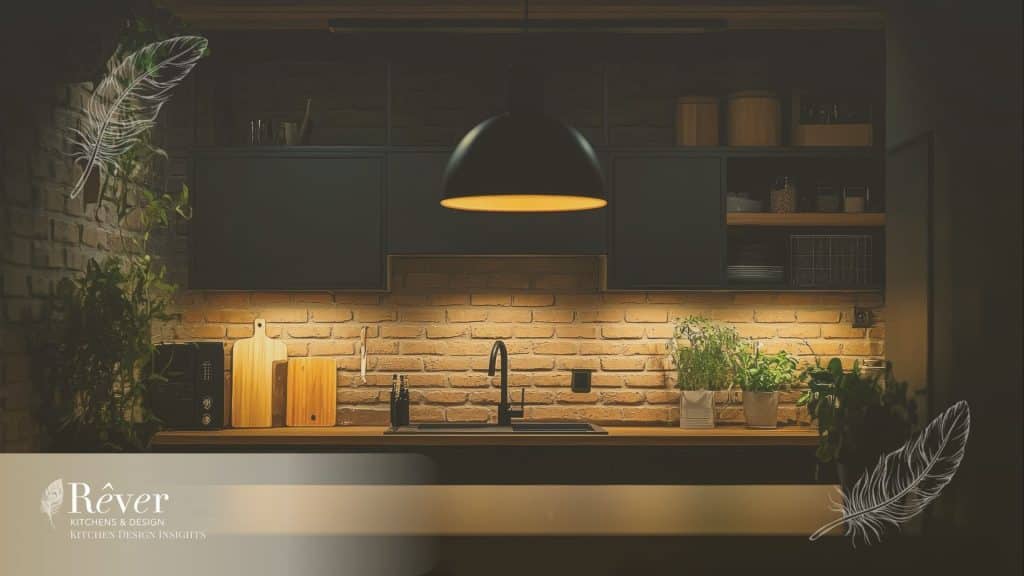
- Under-Cabinet Lighting: One of the most popular solutions in modern kitchens, strip lights, puck lights, and LED tapes illuminate countertops, making food preparation safer and easier.
- Pendant Lights: Often hung over kitchen islands or dining areas, these lights add style while directing light downwards to key workspaces.
- Directional Lights: Adjustable spotlights or recessed lighting can illuminate specific areas, ensuring flexibility based on your cooking or cleaning tasks.
To maximise the effectiveness of task lighting, consider:
- Positioning: Ensure that task lights are directly above or in front of the work area they serve. For example, install under-cabinet lights close to the back of countertops to avoid shadows from overhead lighting.
- Brightness: Task lighting should be significantly brighter than ambient lighting—aim for about 400 to 700 lumens for optimal effectiveness.
Thoughtfully implementing task lighting enhances the functionality of your kitchen, creating a space that is not just beautiful but also practical.
Accent Lighting: Adding Visual Interest
Accent lighting adds an essential layer to your kitchen. It highlights unique features and adds visual interest, making the kitchen a personalised space. This type of lighting emphasises textures, colours, and architectural elements that may go unnoticed. Here’s how to effectively incorporate accent lighting in your kitchen:
- Spotlights: Directed lights can focus on specific areas like artwork or unique shelves, creating a dramatic effect.
- Recessed Lighting: These lights highlight architectural features such as arches, beams, or niches, adding dimension to the kitchen design.
- Decorative Fixtures: Unique hanging lights or stylish lamps can serve as functional fixtures that enhance the overall aesthetic of the space.
When considering accent lighting, focus on:
- Highlighting Features: Identify elements in your kitchen that can benefit from additional light, such as eye-catching tile patterns or beautiful counter finishes.
- Layering with Other Lighting Types: Ensure accent lighting complements ambient and task lighting by adjusting brightness levels and positioning for a seamless transition.
With accent lighting in place, your kitchen will not only be a functional workspace but also a stylish environment customised to reflect your personal taste.
Factors to Consider When Planning a Lighting Scheme
Planning a lighting scheme involves understanding your kitchen’s physical characteristics and layout. Here are key factors to consider:
- Ceiling Height: The height dictates how much ambient light is needed. Higher ceilings might require more powerful fixtures or additional task lighting, and tall pendant lights can create visual interest while ensuring effective light distribution.
- Kitchen Layout: The configuration of your kitchen directly affects where lighting should be placed:
- Open-Plan Kitchens: Use multiple layers of lighting to define areas without creating shadows.
- Galley Kitchens: These narrow spaces may require additional task lighting along the work surfaces to avoid dark corners.
- Architectural Features: Existing features like beams, shelves, and alcoves can influence your design choices. Use them to your advantage by strategically placing accent lighting to highlight their beauty and function.
- Brightness Balancing: Ensure brightness levels are balanced across different areas. Task areas should be distinctly brighter than ambient areas for optimal comfort and functionality.
By considering these factors, you can create an effective kitchen lighting scheme that is both practical and visually appealing.
Integrating Smart Lighting Solutions
In today’s tech-driven world, smart lighting solutions offer convenience and versatility, making it easier to achieve a perfectly tuned lighting scheme. Integrating smart technology allows for tailored control to suit your evolving needs. Here’s how to make the most of it:
- Dimmers and Brightness Control: Incorporating dimmer switches allows you to adjust brightness based on the time of day or mood. Dimming ambient lighting during a dinner party can create a warmer, more intimate atmosphere.
- Colour-Changing Bulbs: These smart bulbs can change the colour temperature and hue of your lighting, enhancing the kitchen’s aesthetic for both work and social gatherings.
- Smart Home Integration: Manage smart lighting systems through apps or integrate them into home automation systems. This lets you set schedules, adjust the lighting remotely, and even use voice-activation, enhancing convenience and efficiency.
By embracing smart lighting, you can add an extra layer of functionality to your kitchen, tailoring the ambience based on real-time needs.
Common Lighting Mistakes to Avoid
When planning your kitchen lighting scheme, avoid these common pitfalls:
- Overlooking Layering: Neglecting the layered approach can lead to uneven illumination. Ensure you incorporate ambient, task, and accent lighting for a balanced design.
- Not Considering Functionality: Avoid choosing fixtures based only on aesthetics; make sure they serve their purpose. For example, beautiful pendant lights should not sacrifice necessary task lighting.
- Ignoring Brand Quality: Opting for cheaper fixtures may save money initially but can lead to greater expenses over time due to poor quality or inadequate illumination. Invest in reputable brands for lasting solutions.
- Excessive Brightness: Too bright bulbs can be uncomfortable and strain the eyes. Choose the right brightness for different areas to create a comfortable atmosphere.
- Failure to Predict Changes: If you plan to remodel or change your kitchen layout, consider how your lighting scheme may need to adapt.
By avoiding these mistakes, you can create a cohesive kitchen lighting design that serves both functional and aesthetic purposes.
Conclusion
Planning the perfect kitchen lighting scheme is essential for both functionality and ambiance. By understanding the layered approach that incorporates ambient, task, and accent lighting, you can create a well-rounded design that enhances both beauty and usability.
Always consider factors influencing placement and selection, such as ceiling height and kitchen layout. Embracing smart lighting solutions can elevate your space, adding adaptability and convenience.
Lighting has the power to transform your kitchen from a simple cooking space to a stunning focal point in your home. Take the time to carefully plan and invest in your kitchen lighting—you’ll be rewarded with a bright, inviting environment that you and your family can enjoy for years to come.